Seattle-area residents: Are you naming a new business, product, or service? Are you considering a name change? Do you have other questions about verbal branding? And that includes branding yourself: Are you trying to put your best verbal foot forward in a resume?

It’s come to The Name Inspector’s attention that lots of people would like a bit of his advice right now, but don’t want to pay a full consulting fee. At the same time, The Name Inspector would like to meet more of his readers and make some new connections. So he’s decided to have “office hours” at his favorite cafe, Victrola (on 15th). $20 for half an hour of conversation about your branding problem.

Be aware that brainstorming is not the best way to make use of this time. Thirty minutes is much too short for that. This would be a conversation about naming or verbal branding strategy, a particular name you’re considering, the right way to phrase a particular idea, or some topic like that.

Here’s how it works: you email The Name Inspector to set up a time, then show up at Victrola with a twenty and a question, and find the guy with the Name Inspector sticker on his laptop. Simple and painless, right? But hurry-this offer is a big bargain and a bit of a social experiment, and might end at any time.

The word awkwordplay, which The Name Inspector has just coined, demonstrates what it means: awkward wordplay. A play on words can be awkward for different reasons, and awkwordplay shows one of the most common reasons: a mismatch in syllable emphasis. Awkwordplay is a blend based on the phonetic overlap between the last syllable of awkward and the first syllable of wordplay. But the second syllable of awkward isn’t emphasized, while the first syllable of wordplay is. If you pronounce awkwordplay so that awkward is pronounced correctly, then you mess up the pronunciation of wordplay. If you pronounce awkwordplay so that wordplay sounds right, then awkward sounds all wrong. Damned if you do, damned if you don’t.

The word awkwordplay is an especially silly example, and it’s made up. But the problem it demonstrates is found in a subtler form in many actual names. Consider the name Teensurance, for an insurance program for parents with teen drivers. Whenever you have a single-syllable word like teen in a blend, you’re going to want to give it some emphasis, especially when it expresses a distinguishing characteristic of something, as teen does in Teensurance. Yet in this name, teen replaces the first syllable of insurance, which isn’t emphasized. As a result, the name sounds strained. It’s an example of awkwordplay.

A similar example is the name Carticipate, for a mobile application to support ridesharing. Car is an important word in this name and deserves emphasis, but it replaces the unemphasized first syllable of participate. Again, awkwordplay.

Contrast Teensurance and Carticipate with a well-constructed blend like Farecast, for an airfare forecasting service. The one-syllable word fare takes its rightful place as the emphasized syllable of the name, which preserves the rhythm of forecast as well.

Combine syllable emphasis mismatch with difficult or unpleasant transitions between sounds, and you’ve got a real mess. The name Mapufacture commits only a minor infraction with respect to syllable emphasis, because map replaces a syllable that receives secondary emphasis. But replacing a syllable with main emphasis would be much better. And, while the transition between the first and second syllable of manufacture sounds nice and smooth, when you replace the n with a p, the result sounds pretty bad.

An especially egregious example of awkwordplay is the name Syncplicity, for file synchronization and backup software. Pronouncing this name is not a matter of the utmost syncplicity. Not only is the word sync stripped of its natural emphasis, but there’s also that ugly consonant cluster between the first two syllables. As a result, the structure and sound symbolism of this name work directly against the intended message. The product is supposed to be about combining things simply, but the name combines things incompetently, and with great difficulty.

The lesson here, dear naming public, is that you shouldn’t jump on every coincidental syllable similarity you find to make a play on words. Sure, map sounds a little like the first syllable of manufacture, car rhymes with the first syllable of participate, teen shares a final sound with the first syllable of insurance, and sync sounds a bit like the first syllable of simplicity. But you’ve got to consider the overall rhythm and flow of your play on words. That means preserving the patterns of emphasized and unemphasized syllables that you find in the words you start with, and not creating ungainly new sound combinations.

Now go and play nice.

Tags: awkwordplay, wordplay, puns, teensurance, carticipate, mapufacture, syncplicity

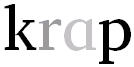
Crop phonetic

While perusing the New York Times magazine last weekend, The Name Inspector saw a big ad for a new organic vodka called Crop. It’s clear what they were going for with this name. It connects the product to its agricultural origins. It makes the vodka seem like something natural and fresh and wholesome-like food!

Let’s try the name out in some natural-sounding contexts. You might walk into a bar and say I’ll take a Crop! Or, you might order martinis* with a friend, and your friend might turn to you and say What kind of vodka do you think they used? And you might say I don’t know, but it tastes like Crop to me! Then you ask the bartender, who says I mix a strong drink-that’s almost pure Crop! Then she gives you a plate of those little cheese puffs and says These taste great washed down with a mouthful of Crop.

Hmm. The name Crop just doesn’t sound that appealing, does it? The Name Inspector realizes it’s kind of childish to say this-he’s embarrassed to bring it up, really-but this name looks and sounds like crap.

The problem stems from a phonetic resemblance, but goes beyond that. Since the name Crop is used to refer to the vodka, it winds up in the same kinds of contexts in which the word vodka gets used. The word vodka is a mass noun-one that refers to a substance that gets measured rather than objects that get counted-so it occurs in contexts like this tastes like ____ and a mouthful of ____. Like vodka, the word crap is a mass noun, at least when it refers to a substance. The word crop, on the other hand, is a count noun. We say things like They export three crops and We got a good crop this year. So the phrasal contexts in which the name Crop is used are much more similar to those of crap than those of the word crop. That pushes us toward the less appealing interpretation. The name Crop can be used in certain count-like contexts, like We’ll take three Crops, but in a bar- or restaurant-ordering situation, any mass noun can be used that way: three waters, three soups, etc.

Setting aside the main problem, the word crop is only marginally appealing. You can have a good crop, or course, and that’s great. But this clipped, no-nonsense word has none of the romance of, say, harvest. Crop evokes the industrial more than the bucolic.

Crop also has other meanings. You can crop a photo, and that’s okay but pretty irrelevant. Then there’s the riding crop, which vaguely calls to mind WASPy horse culture (which is related to cocktails, of course) and sexualized discipline, but is also mostly irrelevant.

So The Name Inspector has to give this name a thumbs-down. Please don’t give him a lot of Crop.

* UPDATE 1/8/2009 The Name Inspector knows that a real martini is made with gin.

Tags: crop, the name crop, crop vodka, vodka, martini

President Obama phonetic

The Name Inspector likes the sound of that.

Tags: obama, election, election2008

Obama phonetic

If Obama wins the presidential election, he won’t just make history for being the first black president of the United States. He’ll also break new linguistic ground in the list of presidents’ names. And The Name Inspector is not talking about the fact that his middle name is Hussein. Coming to terms with the blend of bias, ignorance, and superstition that makes some people consider this fact relevant to Obama’s ability to lead our nation would take us too far afield.

The Name Inspector wants to talk about the name Obama. Just as Obama said about himself, “he doesn’t look like those other presidents on the dollar bills”, the name Obama doesn’t look-or, more importantly, sound-like the other presidents’ names.

An Obama victory would be a victory for vowels everywhere. It would be only the fourth name on the list of presidents to start with a vowel. The others are Adams, Arthur, and Eisenhower. And it would be only the fourth to end with a vowel. The others are Monroe, McKinley, and Kennedy. Well, actually there are six other names ending, orthographically, with r whose final syllables are r-colored schwas, which are technically vowels, but let’s just ignore those for the time being. So, ignoring those, Obama would be the only name on the list to start and end with a vowel. No matter how you slice things, Obama would be the only name on the list to have more vowels than consonants.

So, does this little tidbit of linguistic trivia have any meaning?

Well, The Name Inspector believes that it might have a hand in making Obama’s name such an object of fascination. Obama must be one of the most rhymed- and punned-upon names in the history of U.S. presidential candidates: Obama Mama, Obama-nation, Obamomentum, Obamanable Snowman, etc. (Of course, Barack has also gotten attention: Barack the Vote, Barack and Roll, etc.). Punning and other types of wordplay are ways of calling attention to the physical form of language, so people must think the look and sound of Obama is something special. The vowel-rich sound of Obama also makes it easier to combine with other words without creating ugly consonant clusters. The idea of people punning as much on John McCain’s name is sufficiently ridiculous to have warranted an article in the Onion.

The light, open sound of Obama seems to support the message of change that the campaign has highlighted. This is a case of serendipitous sound symbolism. Even the depiction of the “O” as a rising sun in Obama’s official campaign logo seems to delight in the very vowelicity of it all.

Of course, nobody planned this. Surnames are different from company and product names, which people invent. No candidate sits down and decides what name to use in a bid for the presidency. But a screening process has taken place historically. Though we’re a nation of immigrants from everywhere, the list of presidents’ names is overwhelmingly Anglo-derived, reflecting a prejudice that has stubbornly held on in political elections despite general improvements in Americans’ attitudes about ethnicity. It’s obvious that there are no non-European-sounding names on the list of U.S. presidents. But even if you limit yourself to Europe, there are no names whose origins are distinctly Polish, Greek, Italian, Spanish, or Norwegian, either. And lots of other European ethnicities could be added to that list.

The only “ethnic” (i.e. non-Anglo) names on the list of U.S. presidents are Roosevelt, Van Buren, and Hoover (Dutch); Monroe, Polk, Buchanan, and McKinley (Scottish); Kennedy and Reagan (Irish); and Eisenhower (an Americanized form of German Eisenhauer). Plotting the geographical origins of those names on a map doesn’t get you very far from England. Leaving aside the Celtic-derived names, which got all mixed up with English before there was a United States, you’re left with a list of names derived entirely from the West Germanic branch of the Indo-European language family.

Now along comes this guy named Obama. His name comes from Luo, a Nilo-Saharan language spoken, among other places, in Western Kenya, where his father was born. This is a big jump in the linguistic family tree. What we see in the name Obama is a typological difference between Germanic and the languages related to Luo. While Germanic has a tendency toward closed syllables, which begin and end with consonants, Luo tends more toward open syllables, which end with vowels.

Shankar Vedantam recently wrote a column in the Washington Post about how people subconsciously associate non-European-sounding names with things that are “foreign” and Anglo-sounding names (even when they belong to Brits) with all that is American. Let’s hope Americans can sensibly overcome this bias and vote for Obama/Biden in three weeks!

Tags: election, presidential election, obama, vowels, sound symbolism

The Name Inspector is usually too busy inspecting names to scold people about other linguistic matters. But in this case he can no longer stand to remain silent. He emailed William Safire about an error that appeared in his column On Language way back in April. He’s been waiting for a public outcry, rowdy demonstrations in the streets, an embarrassed retraction from The Gray Lady. But, zilch.

The column appeared in the New York Times Magazine on April 13, and was titled “Revanche is Sweet”. It had a section about Senator Barack Obama’s use of the word perfect in his big speech about race. Safire concerned himself with the use of the word as a verb and as a noun.

Wait, did The Name Inspector just say “noun”? Yes, he did, because that’s what Safire called the form of the word perfect that’s pronounced with the emphasis on the first syllable:

The primary meaning of the noun, pronounced PERfect, is “complete, whole, finished,” and the verb taking that action, pronounced perFECT, means “to complete, make whole, finish.”

Dear reader, that’s not a noun. It’s an adjective. Of course you knew that. (If you didn’t, you might be feeling a little insecure right now. But do you write a column for the paper of record that’s billed as being, you know, On Language? Are you “the most widely read writer on the English language”? No? Then you won’t bear the full brunt of The Name Inspector’s scorn. Though you might get a funny look and a disbelieving but sympathetic shake of the head.)

This was no fluke. The article referred to perfect as a noun no fewer than four times.

Now, sometimes perfect is in fact used as a noun. For example, when it’s the name of a grammatical category indicating completed action and related notions, as in present perfect, past perfect, and future perfect. An editor or teacher might say “You should use the perfect here”. That’s a noun (though even in this context people might think of it as shorthand for “the perfect form” or something like that). Perfect might also be used as a noun when people are discussing philosophical abstractions, as in “The perfect is the enemy of the good”, the common English translation of Voltaire’s “Le mieux est l’ennemi du bien”.

But perfect meaning ‘complete, whole, finished’ in a more general sense is an adjective. As are the words complete, whole, and, sometimes, finished.

There are two issues of concern here. One, what was Safire thinking? And two, how did this get past the editorial staff of the New York Times Magazine? The Name Inspector can’t resist observing that the self-appointed guardians of correct usage are often among those who are most susceptible to the occasional cluelessness about grammatical facts.

It’s possible that Safire was just kicking it old school with his grammatical terminology. Really old school. One definition of noun in the Oxford English Dictionary is simply ‘An adjective’. This is described as an obsolete and rare variant of the term noun adjective, and the most recent citation given is from 1669. If that’s what Safire and the NYTM had in mind, it’s time for them to invest in a new English reference grammar. The Name Inspector recommends Huddleston and Pullum’s The Cambridge Grammar of the English Language, though A Comprehensive Grammar of the English Language by Quirk et al. is also quite nice.

It’s seems more likely that this was just a dumb mistake. In that case, print a correction! Everyone makes mistakes. Nobody’s a perfect. (Now that’s a noun!) Own up to this and help your younger readers avoid the grammatical confusions of their elders.

And New York Times Magazine? If you should ever need a savvy observer of language who knows his way around the web and can tell a noun from an adjective, The Name Inspector can recommend someone.

Tags: safire, william safire, on language, grammar, parts of speech, noun, adjective, new york times, nytimes

Suppose you want to write a computer program to look for unregistered domain names. You could devise a simple algorithm to produce all possible combinations of four letters, five letters, six letters, etc. But that would give you a whole mess of unpronounceable domains, like alsdh.com. So, you might want to strategize a little. You could think about how English syllables are structured, and the possible ways to begin and end a syllable. The letters “lsdh” do not make a possible syllable ending, for example.

That’s phonotactics-the study of sound sequences that do and do not occur in a given language. Some non-occurring sound sequences are simply unpronounceable and are not found in any language. Others are pronounceable but just don’t fit the idiosyncratic preferences of a particular language.

Lately The Name Inspector has noticed a bunch of names used in English-speaking contexts that don’t toe the line of normal English phonotactics. He suspects this is a new strategy for creating short names that are available as .com domains.

It’s really common for names to mess with orthography. That strategy is typical of Web 2.0 names (Flickr, Digg, Zooomr, etc.) and has been with us for a long time (Cheez Whiz). But phonology has been pretty sacred until now. While all the following names are pronounceable, they start with sound sequences that don’t occur syllable-initially in English, except in some borrowed words.

Zlio. This website allows you to instantly create an online affiliate store. It was in the news a while back because it got banned from Amazon.com. In English, the sequence zl- only occurs in the word zloty, the Polish currency unit.

Vlingo. This is a voice-to-text application for mobile devices. We English speakers see vl-at the beginning of a word only in the name Vladimir and in a tiny handful of obscure borrowed words.

Jwaala. An online banking tool. This name is based on a Sanskrit-derived word for ‘fire’. English has plenty of words in which j- is followed by the vowel -u- (e.g. juvenile), but none in which it’s followed by the related consonant -w-.

Srixon. The name of this golf ball manufacturer has a beginning that English speakers only find in the place name Sri Lanka.

How much farther can the phonological sensibilities of English speakers be pushed? As names become increasingly scarce, let’s wait and see.

Tags: zlio, the name zlio, vlingo, the name vlingo, jwaala, the name jwaala, srixon, the name srixon

Until that elusive next name analysis appears, The Name Inspector would like to offer his readers another rare treat: a chance at a free pass to the Biznik-sponsored BizJam indie business conference happening next Wednesday and Thursday in Seattle. Long-time readers, or readers who’ve done some clicking around on this blog, might remember The Name Inspector’s fawning comments about the name Biznik. Last year’s Bizjam was great, and this year’s should be even better.

What can you do at Bizjam? You can learn about how to use social media to help your business, brush up on basic business stuff, and network ’til you getwork. There’s also a party on Thursday night. Last year’s party featured, among other things, good food in really interesting non-food-like shapes.

So, who’ll be the lucky stiff? Whoever presents the most convincing case that they’d benefit from the conference but find the cost a bit prohibitive. If you’re interested in going, email The Name Inspector and lay out your case. If multiple cases have equal merit, people who’ve left comments on this blog will have the advantage, and earlier entries will trump later ones.

Tags: bizjam, bizjam08, biznik, networking, seattle

Sometimes The Name Inspector has little passing thoughts that never amount to blog posts, so he’s decided to try this “Twitter” thing all the kids are talking about. Follow him at http://twitter.com/name_inspector. And no, he hasn’t stopped writing real posts. An unusual one is coming soon.

Tags: twitter

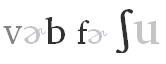
verb-for-shoe-phonetic.jpg

Sometimes it takes a crazy kind of name to snap a name inspector out of a long dry spell. Verb for Shoe is just that kind of name. It belongs to a computerized, interactive shoe created by MIT-spinoff VectraSense Technologies. Apparently this shoe detects different activities of its wearer and inflates and deflates cushions in its insole to provide custom comfort and support. Part of The Name Inspector thinks “Wow!” and the other, larger, more sensible part is reminded of the old Onion headline: “U.S. Dentists Can’t Make Nation’s Teeth Any Damn Whiter“. Just exactly how comfortable can our feet get? $700 comfortable?

As he writes this, The Name Inspector is wearing a $90 pair of Keens, and his feet are just about as happy as they ever have been. But, to be fair, there’s more to the Verb for Shoe experience, apparently. According to talk2myShirt, these shoes are networked. Just why is a little unclear. Something about interacting with people in virtual and real space at the same time. But why through your shoes? So many questions, which at the time of this writing are not answered on the Verb for Shoe website.

But technology aside, the name Verb for Shoe is not only linguistically and conceptually bizarre, but it makes reference to grammatical categories as well. What could be better than that?

Verb for Shoe is a noun (verb) modified by a prepositional phrase (for shoe). But that prepositional phrase ain’t right. Normally a noun like shoe would be preceded by some kind of determiner: a shoe, the shoe, your shoe, etc. Determiners can be left out only in certain situations, like when the noun is plural (for shoes) or when it refers, concretely or abstractly, to an undifferentiated mass of stuff (for mud, for fun). The word shoe is neither a plural noun nor a mass noun. So what’s going on? When do you encounter a prepositional phrase like for shoe? Well, when you’re talking about words and their meanings, as in “What’s the word for shoe in French?”. In that sentence, shoe doesn’t refer to a shoe-it refers to the idea of a shoe.

So the name Verb for Shoe is about the idea of a shoe, or more specifically, changing our collective idea of a shoe. Why Verb for Shoe rather than Word for Shoe? Because we think of shoes as objects, but VectraSense wants us to think of this shoe as an occurrence. Verbs name actions and processes-hence, Verb for Shoe. You can imagine someone in a namestorming session saying, “What’s a verb for shoe? Whatever the verb for shoe is, that should be the name”. And then everyone realizes there is no verb for shoe, and they just go with the phrase that describes the mythical word they’re looking for. This is a very “meta” name.

A great thing about Verb for Shoe is that it gives The Name Inspector a reason to talk about notional (or conceptual) versus grammatical categories. The popular understanding of grammatical categories is that they express the notional ones. When you first learned about nouns and verbs, you probably learned that nouns are for people, places, and things and verbs are for actions. While the correlation between the two types of category is strong, linguists are always quick to point out that it’s imperfect, and that grammatical categories are best understood in morphosyntactic terms-that is, in terms of the kinds of suffixes that attach to words and the positions that words occupy in sentences.

How is the correlation between notional and grammatical categories imperfect? Well, while many nouns do refer to people, places, and things, there are also nouns, like fun, kiss, game, and trial, that name action- and event-like phenomena. And while many verbs name actions and processes, there are verbs like resemble, remain, and cost that name things less dynamic and/or more abstract.

The situation is actually kind of complicated, because different grammatical categories have different degrees of freedom to name different things. Nouns can name just about anything, because people have conceptual reasons to reify all kinds of phenomena that are not very thing-like. Verbs are more restricted than nouns-they never name people, places, and things, for example.

So how do you define nouns and verbs? You can’t do it right without mentioning things like this: Nouns are preceded by determiners and head noun phrases, which can be subjects of clauses. Verbs are marked for tense and aspect and head verb phrases, which join with noun phrases to make clauses. If this all seems a little circular, it is, in a way. Grammatical description is all about how systems hang together. And if it all seems a little a bit dry, well, it probably is. The strange and lucky subculture of language geeks, of which The Name Inspector is a proud member, is able to delight in this kind of grammatical detail. Others find it hard to stand, even if they’re standing in $700 networked shoes.

Tags: verb for shoe, the name verb for shoe, shoes, wearable computers, wearable computing, wearable electronics, grammatical categories, syntactic categories, verbs, nouns, grammar

« Prev - Next »