The Name Inspector is at Gnomedex right now. Vanessa Fox, who founded Google Webmaster Central and now works at Zillow, just led an impromptu discussion about, among other things, how you become a brand when you have a heavy online presence. That fact has created a new world of naming, and Vanessa has a crazy story that gives us a little glimpse into that world.

First, let’s consider some numbers from David Sifry’s “State of the Live Web” report from April 2007. Technorati is currently tracking more than 70 million blogs, and about 120,000 new ones were created every day during the first quarter of 2007. That means it’s really hard to come up with a blog title (and a blog) that stands out.

Vanessa has found an interesting solution to that problem. She has a blog called Vanessa Fox. Nude. which is found at www.vanessafoxnude.com. It does not feature nude photos. It does, however, draw traffic and attention. Vanessa says she doesn’t carry business cards to events like Gnomedex. “I just tell them the name of my site,” she says, “and it’s pretty memorable.” This is a kind of blog naming greatness.

But this greatness was thrust upon Vanessa. She wasn’t the first person to think of attracting web attention by linking her name to the word nude. Someone else thought it would be funny and made a site. But Vanessa says she decided, “If anyone should rank #1 for ‘vanessa fox nude’, it should be me”. So she bought the domain and blogs under it.

Like it or not, this is the world of personal branding on the web.

[tags]gnomedex, gnomedex7, gnomedex7.0, gnomedex2007, vanessa fox, vanessa fox nude, personal branding[/tags]

tni-technorati-top-blog.jpg

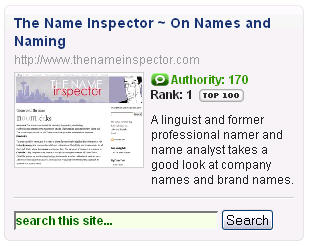
Somehow The Name Inspector has taken over the top blog spot on Technorati, beating out Engadget, Boing Boing, and all the other usual suspects. And with an authority rating of only 170. OK, so this is some kind of bug on Technorati. But The Name Inspector finds it pretty amusing.

[tags]technorati, top blog, top blogs, bug, bugs[/tags]

gnomedex-phonetic.jpg

Next week The Name Inspector will be attending Gnomedex, a technology conference/unconference that happens in Seattle. (If you’re also going to be there, come find The Name Inspector and say hi.) That makes this a great time to write about the name Gnomedex.

To understand this name, you first need to know (if you don’t already) that the conference is run by Lockergnome, the brand under which net entrepreneur Chris Pirillo and his associates do all their stuff. That’s where the Gnome- part comes from. The -dex part, of course, is a reference to COMDEX, a big computer trade show that took place every year between 1979 and 2003. COMDEX got too big and then hurt feelings in the media world in 1999 when it made its press admission criteria overly exclusive, and has never recovered from the resulting backlash. It’s currently in a state of limbo.

COMDEX stands for Computer Dealers’ Exposition. That makes it a hybrid letter/syllable acronym:

COM (syllable) + D (letter) + EX (syllable)

The name Gnomedex can be thought of as a blend of Lockergnome + COMDEX. Because Gnomedex does not, unfortunately, mean ‘Gnome Dealers’ Exposition’, the ending -dex in this name has lost its acronymical (yes, that’s a completely made-up word) function and is only used to set up an analogy to COMDEX.

Gnomedex makes that allusion both to show that it’s the name of a conference and to distinguish that conference from the fallen trade show. Gnomedex is what COMDEX was not: small, a bit loosely organized, and focused on attendees and not at all on vendors. It’s a bold and interesting naming strategy, evoking something negative in order to distinguish yourself from it. We also see this strategy in the name YouTube, which plays on the derogatory term boob tube to distinguish itself from ordinary TV. The strategy might be summed up as, “This is in the same category as X, but it’s in a class by itself”. And Gnomedex is indeed-it’s a strong brand in the technology world. Lots of people, The Name Inspector included, think of it as one of the most interesting tech conferences around.

Gnomedex is a funny name. There’s something absurd about the word gnome, and using it to replace the first syllable of a stuffy, corporate-sounding acronym really makes Gnomedex work. Gnome makes you think of garden gnomes. And the Underpants Gnomes of South Park. They have a three-point business plan that may seem eerily familiar to you VCs and angels out there, and cut a little close to the bone for you web entrepreneurs:

  1. Collect Underpants.
  2. ?
  3. Profit!

Chris probably had a more thunk-out business plan when he started Lockergnome.

The Gnome-substitution works well phonetically. Gnome is just similar enough to Com- to make Gnomedex sound natural, but just different enough to make Gnomedex subtler than a pun.

So where does the name Lockergnome come from? It’s a slight tweak of The Locker Gnome, a nickname that Chris gave himself in high school that relates to one of his physical characteristics. Let’s just say that what Chris more than makes up for in professional stature, he lacks in physical stature. As he says in his history of Lockergnome, people, including his own writing teacher, used to call him “shorty names” such as gnome. One day when Chris was standing by his locker, The Locker Gnome just came to him. Chris insists that he was never actually stuffed into a locker.

[where: 98121]

[tags]gnomedex, gnomedex7, gnomedex2007, lockergnome, chris pirillo, seattle, gnomes, underpants gnomes[/tags]

sonic-boom1.jpg

[tags]sonic boom, sonic boom records, records, record stores, capitol hill, seattle[/tags]

corank-phonetic.jpg

Last month Rogelio Bernal Andreo shared this naming story with The Name Inspector:

The story of coRank is a bit unusual. Back early last year I was thinking of launching a couple of services and wasn’t sure what name to pick (you know how “easy” is to grab a decent .com these days), so I ended up grabbing coRank.com and coTrack.com.

Then I got busy and those services (that were RSS feed related) never materialized.

Then I came with the idea of what coRank is today: a web-based service that would alow anyone to create their own social news network, or, in simple terms, their own Digg-like service (I try to stay away from using the clone term, as I think we have a different goal than just enabling people to create Digg clones, although it’s the easiest way people understand what coRank is about).

So then we started to look for a good .com name for the service. And we searched, and searched, and visited sedo.com 10 times a day, etc. And we were like that for 2-3 weeks until it struck me: “Wait a sec, I already have coRank.com, I have no use for it, and the name seems to me to be perfect for a service like this one!” coRank - cooperative ranking, people ranking things in a cooperative fashion, etc… It made sense and so we went for it.

And that’s the unusual part of it. I’m sure this is not the first site for which the name had been registered even before the idea came up and when the idea came, we weren’t trying to give a service to a name, but there probably aren’t many cases where this happened, and the name and idea actually married so well :-)

This is a pretty funny coincidence. The name coRank is almost too descriptive, as if Rogelio had not traveled far enough in the naming process. But in fact he traveled a great distance, and ended up with a name that he created before his web app had even been conceived. Is it possible, Rogelio, that you got the idea for your app from the name?

Probably not.

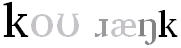
While The Name Inspector often discourages people from using names that are too literally descriptive, in some cases they’re appropriate. This is one of those cases. Descriptive names often work when what you’re naming (a company, a product, a service) doesn’t fall into any recognized category and people need help understanding what you’re up to. That’s almost what’s going on here. Well, actually this case is a bit more complicated than that. coRank is in danger of falling into the category “Digg clone”-that is, of being defined in terms of one particular more prominent web app. If it had a suggestive name like Digg, it might have more trouble escaping the clone label. The name coRank stands out for being more descriptive of a Digg-like service than even the name Digg is. So it works pretty well even though it’s not the most colorful and interesting name in the world. It’s easy to pronounce and understand, and it gets poetic symmetry from the initial and final [k] sounds.

Thanks for your story, Rogelio. Congratulations on finding a use for that name you had sitting around, and good luck with the business.

[tags]corank, the name corank, digg, social network, social news[/tags]

fabjectory-phonetic.jpg

Several months ago Mike Buckbee told The Name Inspector about his startup named Fabjectory. It will take a 3D digital representation of your Nintendo Mii or SecondLife avatar, or a 3D model you create yourself with SketchUp, and turn it into an actual physical object.

Making the virtual real seems to be a new trend. Have you heard about the promotional stunt for the upcoming Simpsons movie? Twelve 7-Eleven stores in the U.S. have been transformed into Kwik-E-Marts, and carry real versions of the products sold by the fictitious convenience store in the animated series. You can buy a six-pack of Buzz Cola, a box of Frosted KrustyO’s cereal, or a Radioactive Man comic book.

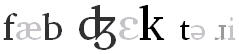
But back to Fabjectory. This is one of the more linguistically complicated names that The Name Inspector has come across (it rivals Bare Escentuals, but is more interesting and less groanworthy). It’s not only a blend name-it’s a double blend! As Mike explains on his blog, It’s made out of the words fabject and factory. But of course, you may not have known that fabject was a word. That’s because it was only coined a few years ago by science fiction author and technology observer Bruce Sterling.

Fabject is a blend of fabricated and object, and refers to a new type of thing created by relatively inexpensive “3D printing” or “rapid prototyping” machines. These things can take a 3D digital model and squirt together thin layers of plastic goop or powder that hardens to make solid objects.

While commercial fabbers, as they’re called, still cost tens of thousands, they’re bound to come down in price, and there’s a community of fab fans who use and promote inexpensive fabbers made from open source kits. Sterling, always a visionary, has given us a new word for something that may become as commonplace as printed documents.

So the whole structure of the name Fabjectory is something like this (the underlined letters show where the pieces overlap):

[ [ Fabricated + object ] + factory ] = Fabjectory

Whew! An additional dimension comes into play when you realize that -jectory evokes the word trajectory, suggesting forceful forward motion and, metaphorically, the future. There’s also the coincidence of fabject starting with the same letter as factory, so that it also seems like the word factory has just been stretched out a bit.

One downside of the name is the fact that, orthographically, it includes the word abject (as in abject poverty), which means something like ‘low, degraded’. Since abject is stressed on the first syllable, though, and the name Fabjectory has its primary emphasis on the -jec- part, this association is pretty weak.

This is not the most elegant name in the world, but it works surprisingly well considering its complexity. Somehow the jointed quality of the name fits the idea of making, fabricating, manufacturing. Given the ever-increasing difficulty of finding available TLD domain names, this kind of multi-layered name might be the future of naming.

[tags]fabjectory, the name fabjectory, fabber, fabbers, fabbing, fab, rapid prototyping, 3D printing, 3D printers, bruce sterling[/tags]

Marcelo Calbucci, founder and CTO of Sampa, invited The Name Inspector to do a guest post for his Seattle 2.0 blog. The post is up. It’s a brief and basic naming primer for entrepreneurs. Readers of this blog, connoisseurs that you are, may find the material a bit elementary, but just in case you want to check it out…

[tags]seattle 2.0, seattle2.0, marcelo calbucci, marcelocalbucci, sampa, naming primer[/tags]

Richard MacManus at Read/WriteWeb has posted a great list of the 10 worst web app names. The comment section, just as great, shows that those ten have a lot of competition.

[tags]readwriteweb, rrw[/tags]

In the 10 company name types post, The Name Inspector identified ten ways to put together a name out of meaningful parts. That post was about the nuts and bolts of a name’s structure. This is the first post is a series that will focus on an issue that’s more slippery but also more fundamental: how the intrinsic meaning of a name (if there is one) relates to the company, product, or service that the name stands for.

To examine this issue it helps to have a long list of different names for the same thing. That makes it possible to see the range of meaning strategies used to deliver a message relevant to that thing. This post uses Charles Knight’s list of the Top 100 Alternative Search Engines, and considers the different ways the names on the list relate to web search.

The direct approach

Of course, many names are based on words that already have strong conventional connections to the idea of web search and web use:

Searchbots
CrossEngine
FyberSearch
nnseek
Picsearch
Searchles
SearchTheWeb2
Srchr
TheFind
50matches

Some names evoke the more general idea of web surfing, which is getting hard to imagine doing without search technology. The idea of web surfing is of course based on a metaphor that treats web use as travel (discussed below). The word surf, however, is now the most basic verb we have for web use.

SurfWax
Serph

Other names focus less on the activity of web use and more on the informational need that it serves:

Answers
FactBites

Metaphor

Not surprisingly, many of the names on the Alt Search Engines list involve metaphor. That is, they evoke meanings that do not relate to search literally, but that give us a way to think about search using another concept as a sort of model or template.

There are two important things to keep in mind about metaphor. First, it is primarily a conceptual issue, and its linguistic significance follows from that. Second, most of the metaphors that people use in names are not made up, but are already a part of the way we all look at and talk about the world. There are existing metaphors that we can all draw upon and expand upon. A famous and accessible discussion of these ideas can be found in George Lakoff’s book “Metaphors We Live By”.

So what kinds of metaphors are we talking about here? One of the most common casts the search engine as a sentient being.

Search engine as sentient being

Agent 55
GenieKnows
Knuru (play on guru)
Ms. Freckles
Pixsy
Sidekiq
Swamii
Turboscout
guruji (based on the word guru)

This one is a little tricky because personification is common in names independently of any particular metaphor. However, many of the names above emphasize aspects of personhood that are especially relevant to search. Agents, genies, gurus, swamis, and scouts are all people who know or find out things that are useful to us.

Other names relate more generally to the idea of intelligence:

Intelligence

Cognitionsearch
Wisenut
Wize

Another important metaphor treats search and web use as motion. Of course, this metaphor has become a normal part of the way we think and talk about the web: we navigate it, we surf it, we go to or visit websites, etc.

Some names relate to the idea of motion in a general way:

General motion

Bookmach
GameSkoot
GoPubMed
Turboscout
Skreemr (relates to fast motion as well as sound)

Other names tie into the conventional navigation metaphor by evoking different kinds of travel:

Travel

Trexy
Icerocket

A little oddly, some names focus on dancing. These names may be motivated by the motion metaphor combined with the idea that dancing is fun.

Dancing

ChaCha
gogo
iBoogie

The flip side of the motion metaphors is the idea that the web is a world in which we can move.

Web as world

BlogDimension
Kosmix
Sphere
MP3Realm

A completely different metaphor that’s used in the context of web search is the one that treats becoming aware of new things as uncovering objects. A prominent website name that uses this metaphor is Digg (which The Name Inspector has written about).

Becoming aware of things as uncovering objects

BlogDigger
FeedMiner
Fisssh!

The last name on that list combines the uncovering metaphor with the nautical context implicit in the web navigation metaphor.

Related to the uncovering metaphor is the metaphor that treats learning and understanding as physical taking or holding. We use this metaphor when we talk about grasping a difficult subject. Only a one name on the list clearly uses this metaphor, which means that there’s an opportunity for you namers of new search engines!

Grabble

Even this brief examination of search engine names makes it clear that metaphor is an important naming tool that can be used in different ways. When naming anything, it’s important to understand the metaphors we already use to think about that thing.

[tags]metaphor, search, search engines, alt search engines[/tags]
kijiji-phonetic1.jpg

We’re really getting a chance to enjoy the graphic possibilities of the letters i and j lately. If you’re a blogger you can put a Lijit Wijit on your blog. And now there’s Kijiji. Actually, there has been Kijiji for a while now in other countries, but eBay has just launched a U.S. version of this local classified ad network, putting them in direct competition with Craigslist.

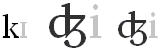
Just look at all those dots and vertical lines. When the name is written in a serif font, as it is in the company logo, the dots look like heads, the vertical lines look like torsos, and the serifs look like arms reaching out in a welcoming embrace or unbridled enthusiasm or something else great like that. You would be forgiven for thinking that this unusual name was invented just to achieve this graphical effect. But actually kijiji is a Swahili word meaning ‘village’. It’s a diminutive form of the word mji, which means ‘town’. So it’s almost as if in Swahili they call a village a townlet.

Why choose Swahili for the name of an international network of classified ad sites? There are two good reasons. First, Swahili is a lingua franca-a common language used for business by speakers of other languages-in East Africa. Native speakers live in and around Tanzania.

Second, Swahili syllables tend to conform to what phonologists consider the universally preferred syllable structure, which is a single consonant followed by a single vowel, represented CV. (An exception is the first syllable of the word mji, which consists entirely of the nasal [m] sound. That may seem exotic, but in English we actually have syllables consisting only of nasal sounds, like the final syllable of the word button. We just don’t put those syllables at the beginnings of words.)

What does it mean for the CV syllable to be universally preferred? For one thing, it means kids produce this kind of syllable first when acquiring language. It also means that this kind of syllable is found throughout the languages of the world, while other kinds of syllable are more likely not to be allowed in this or that language. Most importantly, it means that in theory just about everybody in the world should find it pretty easy to pronounce this name.

About the first part of Kijiji: Have you studied French or Spanish or German or some other language and struggled with the system of grammatical gender? Well, if you didn’t enjoy that, steer clear of Swahili. It has more than ten genders, or noun classes, as they’re commonly called. Each noun starts with a prefix like ki- or m- showing its class. When a noun is used as a subject, verbs and some other words must be marked for agreement with its class prefix. At least the noun classes are based more on meaning than the random gender systems of other languages are, so it’s often easy to guess which class a word belongs to.

Anyway, The Name Inspector is getting off topic. How does this name do in English? Well, it’s actually a little hard to pronounce, preferred syllable structure notwithstanding. The two affricate sounds followed by high front vowels are kind of awkward to squeeze out. And despite the graphical gimmick of the name (or perhaps because of it), the orthography is a little hard to parse. When you see this name on the page or the screen, it looks like a bunch of scratches-it’s hard to distinguish the letters.

So this name makes perfect sense from a semantic and sociolinguistic point of view, but it suffers from the very orthographic and phonetic properties that make it special.

[tags]kijiji, the name kijiji, swahili, lijit, wijit, lingua franca, syllables[/tags]

« Prev - Next »