The Name Inspector would like to remind everyone in the Seattle area about BizJam, which is happening all day this coming Saturday. If you’ve been on the fence about whether to go, take note: The Name Inspector is prepared to offer one of his readers a half-price discount on admission. The first person to send a request by email, along with some bit of useful feedback about the site (a name to analyze, a topic to cover, etc.), will get it.

victrola.jpg

Tags: victrola, coffee, cafe, coffeehouse, sign, signs, capitol-hill, capitolhill, seattle

surface-phonetic.jpg

Microsoft recently unveiled Surface, a tabletop computer with an amazing multi-touch interface. There’s no keyboard or mouse-you interact with Surface through its display, which is touch-sensitive and can respond to simultaneous touches from multiple fingers or people. That means you can “grab” objects and move them around, re-size photos by stretching them out with your fingers, and do other things that seem kind of like magic.

These multi-touch interfaces are really exciting. Jeff Han, a consulting research scientist in NYU’s Department of Computer Science, gave a jaw-dropping demo of his multi-touch technology that The Name Inspector caught at ETech 2006. Here’s a video for a similar demo at TED 2006. Judging from the videos on Microsoft’s website, Surface is a simpler, consumer-oriented implementation of the same idea, with the added capability of interacting with devices, like cellphones and digital music players, that are placed on top of it.

The name Surface is about as generic as you can get without actually naming a product category. The other Microsoft brand name that it most resembles is Word. Each of these names is based on a noun that literally refers to something associated with the product in question-both names use metonymy. However, while Word is a relatively concrete reference to an aspect of language (about as concrete as you can get where language is concerned), Surface has a very abstract, schematic meaning.

The word surface is an intrinsically relational noun-we seldom talk about a surface unless we specify what it is a surface of (a planet, the cerebral cortex, etc.). One of the interesting things about the name Surface is that it takes this relational meaning and makes it stand on its own-now we can talk about owning a Surface, without specifying what it is the surface of. Because the name is a reification of an abstract spatial concept, it suggests the gray area between the real and the virtual. This is perfect for the product, which allows people to interact with virtual objects on the screen as if they were physically present: touching them, moving them, spreading them out, etc.

Of course, it would be a mistake to link this technology directly to the idea of a tabletop computer. Microsoft envisions a future of surface computing in which the technology will be found on lots of things besides tabletops-including even “the hallway mirror”. So this name is an attempt to define a new category and to own it.

The word surface has a some other positive features. It contains the word surf, making a pretty explicit connection to the web (something Microsoft has been especially interested in doing lately). It also has appropriate sound symbolism for a multi-touch interface. All its consonants are voiceless fricatives, which have a hissing sound that suggests movement with light friction.

The word surface is not an unalloyed asset, however. Its big downside is its conventional metaphorical connection to the ideas of superficiality and potentially deceptive appearances. When we scratch the surface of a topic, we investigate or discuss it in the sketchiest of terms, without engaging with most of what there is to know about it. When we say that something seems one way on the surface, there’s a strong implication that it’s different deep inside.

Metaphorically speaking, however, a system’s user interface is its surface. The suitability of the word in this context trumps the possible negative associations. The Name Inspector would be happy to delve into the world of surface computing, and can’t wait until Surface-or some other competing product-is available at a consumer-friendly price.

Tags: surface, the name surface, microsoft surface, the name microsoft surface, microsoft word, multi-touch, touch-sensitive, tabletop computer

The Name Inspector’s 10 name types post has been translated into Russian. Just for fun, here it is translated back into English by Google Translate.

Most company names consist of just one or two meaningful parts. That makes sense, because brevity is important in a name for several reasons: memorability, simplicity of pronunciation, ease of writing and typing, and graphic compactness in a logo.

So crowded is the space of names, however, that people have been forced into three-meaningful-part territory. The first example that springs to mind is MyBlogLog, the source of that widget at the bottom of The Name Inspector’s sidebar. (By the way, if you’re a MyBlogLog user, you’re hereby invited to join The Name Inspector’s community.) If you shortened this name to MyBlog or BlogLog, you’d have something that fits a common naming pattern: MyBlog is like MySpace or YouTube, and BlogLog is like SmugMug or TagJag. With MyBlogLog, however, there’s kind of a lot going on. Technically it’s a phrase name, but the way it’s written, without any spaces, is an invitation to pronounce it as a single word. And that’s kind of kind of tricky. Which syllable do you emphasize? If you pronounce the name as a phrase, you probably emphasize both my and blog. If you pronounce the name as a single word, you probably de-emphasize either my or blog. But the result sounds kind of hurried and squished together, doesn’t it?

One of the clunkiest three-part names The Name Inspector has encountered recently is Side Job Track. Again, just Side Job or Job Track would be a very normal-sounding name (well, Side Job sounds vaguely lewd to those of us whose minds wander in that direction). But Side Job Track? With this name the natural phrasal pronunciation is not even available. You have to break it down as a compound that contains a compound-most likely side job + track. If you go with this analysis, you emphasize Side, kind of mumble out Job, and may or may not place any emphasis on Track. It just doesn’t flow.

Matters are complicated further by the fact that track can be a noun or a verb. It’s most natural to interpret the last word of a multi-word name as a noun, but if you do that you make a confusing connection to the phrase job track (like career track), which isn’t as clearly relevant as the idea of tracking side jobs. So this name is kind of a jumble.

That’s not to say Side Job Track isn’t a great service. The Name Inspector has been using it to keep track of billable hours and do invoices for consulting jobs, and while there are a few kinks to work out, it has a really nice set of features. Check it out.

While he’s on this topic, The Name Inspector must give a nod of grudging respect to Bare Escentuals, the San Francisco-based cosmetics company. Here’s a pun name with four meaningful parts (not including the morphological breakdown of essentials) that actually kind of flows. Built on the phrase bare essentials, it pulls off a double pun, tweaking essentials so that it evokes both the words scent and sensual. In the Olympic sport of naming, this one gets a good but not great score for artistry and extremely high marks for difficulty.

Tags: MyBlogLog, the name MyBlogLog, blog community, Side Job Track, the name Side Job Track, invoicing, Bare Escentuals, the name Bare Escentuals, double puns, cosmetics

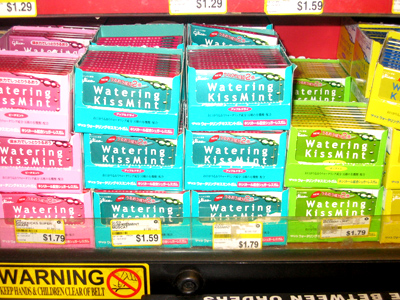
watering-kissmint.jpg

Tags: watering kissmint, wateringkissmint, gum, chewing gum, chewinggum, uwajimaya, seattle

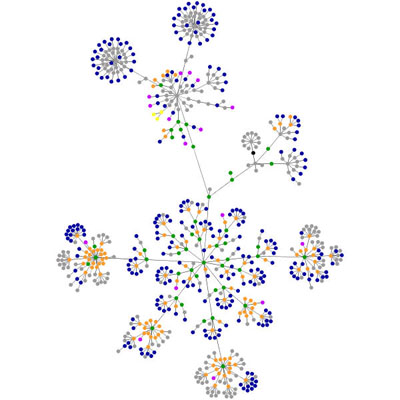
This has nothing to do with naming, but it’s gorgeous: The Name Inspector website depicted as a graph, created by Sala’s app. Thanks to swissmiss for the tip.

tni-as-graph-400px.jpg

fedex-kinkos-phonetic.jpg

Have you noticed that your local Kinko’s has become FedEx Kinko’s?

Kinko’s is known for having a laid-back corporate culture. Maybe a little too laid back. The Name Inspector once went to a 24-hour Kinko’s in Manhattan, and there was no one there. Not only were there no other customers, but there were no employees, either. The doors were open, the lights were on, the copy machines were humming, but nobody was home.

So The Name Inspector saw FedEx Kinko’s as a promising development. Those people at FedEx have to be on top of things. You know, when it absolutely, positively has to be there overnight and all that. The Name Inspector pictured someone with the quasi-military efficiency coming in and whipping things into shape, like Tom Hanks in that terrible stranded-on-a-desert-island movie (early in the movie, when he was a FedEx exec-not later, when he was a crazy hairy guy talking to a volleyball).

Despite the differences in corporate culture, FedEx and Kinko’s are a natural match. For The Name Inspector at least, both places inspire a combination of love and queasy dread. Love because both places provide important services when you really, really need them. Dread because both places are associated with impending deadlines and procrastination.

Suppose you’ve traveled to a strange city-oh, say, Houston-to make a presentation, and you’ve misplaced your handout. OK, suppose you didn’t finish the handout before you left home. You need to find a place to print it out and make copies. Suppose it’s very late at night. When you find a twenty-four hour Kinko’s, your heart soars, because you know that everything will be alright. Love.

But then you actually go to the Kinko’s and start doing what needs to be done. It takes longer than you expected, because two copy machines are jammed, the other one is low on toner, and there’s nary a Kinko’s employee in sight. It’s getting later and later. Dread.

No doubt the reader can imagine stories about FedEx that, while different in their particulars, have a similar emotional resonance.

Despite their association with dread, FedEx and Kinko’s are a couple of iconic names. Understandably, the big cheeses of the new hybrid company could not part with the brand equity of either name. So they went for the easiest option-the only option, really: they stuck the two names together. The result is a monstrosity of a name that would never make it in the biz if its parents weren’t celebrities.

Might they have gone with a blend? Well, Finko’s, KinkEx, and Fedinko’s are definitely memorable names, but those stodgy corporate types might have felt these options failed to project the appropriate image. On the other hand, they’re really no less dignified than Kinko’s-just less familiar. Kinko was, apparently, the nickname of the curly-haired founder, just in case you’re wondering where that gem came from.

Is the name FedEx Kinko’s a compound? No. A compound is made of two words but pronounced as one word. More specifically, it has the intonational properties of one word-most notably, only one of its syllables carries primary stress. In the name FedEx Kinko’s, both parts-FedEx and Kinko’s-have syllables that get full word-worthy stress. The first syllable of Kinko’s is emphasized a little more than the first syllable of FedEx, but that has to do with the phrasal status of this name.

The first part of this name, FedEx, is already a compound. Or rather, it’s what we at the old naming company used to call a clipped compound, or a clipcom, to use a term that demonstrates what it describes. A clipcom takes the first part of each of two words and sticks them together.

Did you know that the word taxicab comes from the words taximeter and cabriolet? That’s another clipcom.

Putting the clipcom FedEx in front of the name Kinko’s makes for a real mouthful. The pronunciation is awkward, especially with the x right in front of the k. Besides, the whole thing just feels wrong. It resembles a company name modifying a brand name, like Apple Macintosh or Oxo Good Grips, or a brand name modifying a generic term, like Northwest Airlines, but its meaning doesn’t seem to fit either of these familiar patterns.

But what are you gonna do? They had no choice, really. When you walk past your local copy store, you can still look up and see the familiar Kinko’s name. Now you just see FedEx right there with it, riding its ass and keeping it in line. And, of course, offering shipping services.

Tags: fedex kinko’s, the name fedex kinko’s, fedex, kinko’s, finko’s, kinkex, fedinko’s, company name, business name, frankenbrand, volleyball

Some of you have sent email or left comments asking for advice about how to name your company. The Name Inspector hopes you understand that it takes work to come up with good suggestions, and it’s not really sensible for him to do that work for free because his time is scarce and there are names to inspect and other things to attend to. So, as a response to these requests, The Name Inspector has decided to offer consulting services. If you’d like help with a naming project, ranging from a brief consultation to a full-on naming effort, please click on the “consulting” link at the top of the page to find out what to do.

While we’re on the subject of tooting one’s own horn, The Name Inspector would like to call everyone’s attention to an upcoming event that all independent (and independent-minded) businesspeople of the Pacific Northwest should attend: BizJam. It’s happening on June 9, and it’s organized by the good folks at Biznik, so it’s bound to be truly fun, interesting, and useful. The Name Inspector will be be speaking about “How to choose the perfect name for your business”. Head Bizniks Dan McComb and Lara Eve Feltin have done an impressive job of fostering an independent business community in Seattle and initiating and promoting great events. If you miss this one you’ll hear about it later and be sorry.

Tags: biznik, bizjam, seattlebizjam, consulting, name consulting, naming consulting, name consultant, naming consultant

waggle-pathable-phonetic.jpg

Shelly Farnham and Peter Brown are the co-founders of Waggle Labs, a Seattle software and consulting company that specializes in social technology. Their new product, Pathable, lets participants in social events tag themselves with their interests and personal connections to find other similar participants. Shelly and Peter were kind enough to share a story about how they came up with these names. Here’s what they wrote (in the third person) about Waggle Labs:

Their goal was to have a name that reflected on the one side their creativity and sense of fun, and on the other side their extensive advanced prototyping and social science backgrounds. They brainstormed through a number of names with their friend Leo sitting in front of a whiteboard that had words like “social, innovative, fun, creative, smart, technology, internet, web” written on it.

Shelly and Peter had both been through the process of naming projects a number of times before, and had each developed a trust in their instinctive response to names (that “blink” reaction as described by Malcom Gladwell — he argues that through rapid cognitions we often reach instant conclusions that are “really powerful and really important and, occasionally, really good”). [link http://www.gladwell.com/blink/] The goal was to brainstorm through and develop a name they both instinctively liked. They both read a lot of science fiction, so one of the final contenders was General Galactic. Peter loved it, Shelly less so.

“It sounds like General Electric.” She recalls saying.

“But that’s great!” said Peter. “We can leverage residual name recognition.”

“Mmmm. But, General Electric! It is a very masculine name, brings to mind heavy machinery.”

Shelly was a part of an informal art group called Hive-Mind, referring to the emergent intelligence of collective organisms. [Link to Jordan's bee blog: http://hive-mind.com/bee/blog/ ] For her, bees and hives had a strong association with the power of the collective intelligence of the Internet. “What about something to with the Waggle Dance?” She thought the word waggle evoked a sense of lighthearted fun and the Waggle dance is a really amazing phenomenon:

From wikipedia:

Waggle dance is a term used in beekeeping and ethology for a particular figure-eight dance of the honeybee. By performing this dance, successful foragers can share with their hive mates information about the direction and distance to patches of flowers yielding nectar or pollen, or both, and to water sources.

Through innovative social technology they hoped to enhance people’s social experiences, providing direction to the online honey, so to speak. So Waggle Labs seemed like a great fit. After their brainstorming session they took a day to run both names by their friends: “What do you think, General Galactic or Waggle Labs?”. After twenty four hours of mulling over the issue, they decided to go with Waggle Labs. Much later, a few people pointed out the similarity between Waggle Labs and Google Labs — to which Shelly would shrug and smile and say “well I guess we can leverage residual name recognition.”

Despite the similarity to Google Labs, The Name Inspector is happy that Shelly and Peter decided to go with Waggle Labs. The great thing about this name is that it sounds really playful but has a serious and deeply interesting scientific association. The bee waggle dance is a fascinating case of animal communication that’s gotten a good deal of academic attention. The Name Inspector even had reason to learn about it during his linguistic training. Linguists like the waggle dance both because it shows how complex animal communication can be, and because it’s quite unlike human language, so it helps to show what makes the latter special. Among other things, human language has what Charles Hockett called duality of patterning-one system that defines discrete building blocks of sound (phonology), and a separate one that uses those building blocks to define meaningful units (lexicon) and their combinations (morphosyntax). That’s what allows us humans to have a such a big vocabulary and a limitless repertoire of messages. But The Name Inspector digresses.

Here’s what Shelly and Peter wrote about Pathable:

One of their projects is Pathable (still under development), an event-based social networking tool that explores the use of lightweight profiles with social tagging for matchmaking. They agreed upon the name with that same mutual, instinctive response. Shelly originally wanted to go with SpiderTap. The spider in the web is another metaphor for online social interactions that Shelly always liked. “You tap the strands you’ve spread through the web, see where there’s a wiggle, and move in that direction.” Peter did not like spiders however. They then thought through a few more names around the metaphor of finding the shortest path between two points. “Pathable!” simply leapt into Peter’s brain. He immediately went online, saw that it was available as a domain name, and said “that’s the one”. It seems like an expensive domain name and yet cost them only $8. Shelly agreed it was a good name, recognizing most people disliked spiders, and that their instinctive, negative reactions were not easily overcome. She also thought Pathable had somehow a more business-y ring to it, which fit the target group of the project.

Pathable sounds like a real word but is not, so they got to create their own definition:

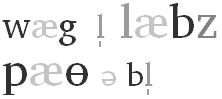
pathable (păthə-bəl, päthə-bəl) adj.

To supply with the means, knowledge, or opportunity to discover the hidden courses upon which things move.

The Name Inspector also likes the name Pathable. It’s a strange but lovable beast. While it does have an oddly natural ring to it, it has a notable peculiarity. Do you see it?

Pathable is strange because the suffix -able normally attaches to verbs (readable, useable, believable, etc.), and path is a noun. In the name Pathable we interpret path as a verb because the suffix forces us to. This is a type of what linguists call coercion, which of course is just a fancy scientific way of saying the same thing. The coercion of path into a verbal interpretation gives this name a unique dynamic quality and a hook that really makes it hang on in memory.

What accounts for the natural feel of Pathable, considering that it’s grammatically anomalous? Partly it’s the fact that there are so many words in English that are both verbs and nouns, and many of them regularly occur with the suffix -able (e.g. lovable, notable, debatable, etc.). This might make people subconsciously get used to seeing nouns followed by -able, even though they know these words are supposed to be functioning as verbs in this context.

The Name Inspector would like to congratulate Shelly and Peter, wish them luck with their venture, and thank them for giving him an excuse to talk about geeky linguistic stuff.

Tags: waggle labs, the name waggle labs, waggle, waggle dance, bee waggle dance, pathable, the name pathable, coercion, suffix, suffixation, affix, affixation, social technology

« Prev - Next »