In the 10 company name types post, The Name Inspector identified ten ways to put together a name out of meaningful parts. That post was about the nuts and bolts of a name’s structure. This is the first post is a series that will focus on an issue that’s more slippery but also more fundamental: how the intrinsic meaning of a name (if there is one) relates to the company, product, or service that the name stands for.

To examine this issue it helps to have a long list of different names for the same thing. That makes it possible to see the range of meaning strategies used to deliver a message relevant to that thing. This post uses Charles Knight’s list of the Top 100 Alternative Search Engines, and considers the different ways the names on the list relate to web search.

The direct approach

Of course, many names are based on words that already have strong conventional connections to the idea of web search and web use:

Searchbots
CrossEngine
FyberSearch
nnseek
Picsearch
Searchles
SearchTheWeb2
Srchr
TheFind
50matches

Some names evoke the more general idea of web surfing, which is getting hard to imagine doing without search technology. The idea of web surfing is of course based on a metaphor that treats web use as travel (discussed below). The word surf, however, is now the most basic verb we have for web use.

SurfWax
Serph

Other names focus less on the activity of web use and more on the informational need that it serves:

Answers
FactBites

Metaphor

Not surprisingly, many of the names on the Alt Search Engines list involve metaphor. That is, they evoke meanings that do not relate to search literally, but that give us a way to think about search using another concept as a sort of model or template.

There are two important things to keep in mind about metaphor. First, it is primarily a conceptual issue, and its linguistic significance follows from that. Second, most of the metaphors that people use in names are not made up, but are already a part of the way we all look at and talk about the world. There are existing metaphors that we can all draw upon and expand upon. A famous and accessible discussion of these ideas can be found in George Lakoff’s book “Metaphors We Live By”.

So what kinds of metaphors are we talking about here? One of the most common casts the search engine as a sentient being.

Search engine as sentient being

Agent 55
GenieKnows
Knuru (play on guru)
Ms. Freckles
Pixsy
Sidekiq
Swamii
Turboscout
guruji (based on the word guru)

This one is a little tricky because personification is common in names independently of any particular metaphor. However, many of the names above emphasize aspects of personhood that are especially relevant to search. Agents, genies, gurus, swamis, and scouts are all people who know or find out things that are useful to us.

Other names relate more generally to the idea of intelligence:

Intelligence

Cognitionsearch
Wisenut
Wize

Another important metaphor treats search and web use as motion. Of course, this metaphor has become a normal part of the way we think and talk about the web: we navigate it, we surf it, we go to or visit websites, etc.

Some names relate to the idea of motion in a general way:

General motion

Bookmach
GameSkoot
GoPubMed
Turboscout
Skreemr (relates to fast motion as well as sound)

Other names tie into the conventional navigation metaphor by evoking different kinds of travel:

Travel

Trexy
Icerocket

A little oddly, some names focus on dancing. These names may be motivated by the motion metaphor combined with the idea that dancing is fun.

Dancing

ChaCha
gogo
iBoogie

The flip side of the motion metaphors is the idea that the web is a world in which we can move.

Web as world

BlogDimension
Kosmix
Sphere
MP3Realm

A completely different metaphor that’s used in the context of web search is the one that treats becoming aware of new things as uncovering objects. A prominent website name that uses this metaphor is Digg (which The Name Inspector has written about).

Becoming aware of things as uncovering objects

BlogDigger
FeedMiner
Fisssh!

The last name on that list combines the uncovering metaphor with the nautical context implicit in the web navigation metaphor.

Related to the uncovering metaphor is the metaphor that treats learning and understanding as physical taking or holding. We use this metaphor when we talk about grasping a difficult subject. Only a one name on the list clearly uses this metaphor, which means that there’s an opportunity for you namers of new search engines!

Grabble

Even this brief examination of search engine names makes it clear that metaphor is an important naming tool that can be used in different ways. When naming anything, it’s important to understand the metaphors we already use to think about that thing.

Tags: metaphor, search, search engines, alt search engines

kijiji-phonetic1.jpg

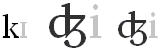
We’re really getting a chance to enjoy the graphic possibilities of the letters i and j lately. If you’re a blogger you can put a Lijit Wijit on your blog. And now there’s Kijiji. Actually, there has been Kijiji for a while now in other countries, but eBay has just launched a U.S. version of this local classified ad network, putting them in direct competition with Craigslist.

Just look at all those dots and vertical lines. When the name is written in a serif font, as it is in the company logo, the dots look like heads, the vertical lines look like torsos, and the serifs look like arms reaching out in a welcoming embrace or unbridled enthusiasm or something else great like that. You would be forgiven for thinking that this unusual name was invented just to achieve this graphical effect. But actually kijiji is a Swahili word meaning ‘village’. It’s a diminutive form of the word mji, which means ‘town’. So it’s almost as if in Swahili they call a village a townlet.

Why choose Swahili for the name of an international network of classified ad sites? There are two good reasons. First, Swahili is a lingua franca-a common language used for business by speakers of other languages-in East Africa. Native speakers live in and around Tanzania.

Second, Swahili syllables tend to conform to what phonologists consider the universally preferred syllable structure, which is a single consonant followed by a single vowel, represented CV. (An exception is the first syllable of the word mji, which consists entirely of the nasal [m] sound. That may seem exotic, but in English we actually have syllables consisting only of nasal sounds, like the final syllable of the word button. We just don’t put those syllables at the beginnings of words.)

What does it mean for the CV syllable to be universally preferred? For one thing, it means kids produce this kind of syllable first when acquiring language. It also means that this kind of syllable is found throughout the languages of the world, while other kinds of syllable are more likely not to be allowed in this or that language. Most importantly, it means that in theory just about everybody in the world should find it pretty easy to pronounce this name.

About the first part of Kijiji: Have you studied French or Spanish or German or some other language and struggled with the system of grammatical gender? Well, if you didn’t enjoy that, steer clear of Swahili. It has more than ten genders, or noun classes, as they’re commonly called. Each noun starts with a prefix like ki- or m- showing its class. When a noun is used as a subject, verbs and some other words must be marked for agreement with its class prefix. At least the noun classes are based more on meaning than the random gender systems of other languages are, so it’s often easy to guess which class a word belongs to.

Anyway, The Name Inspector is getting off topic. How does this name do in English? Well, it’s actually a little hard to pronounce, preferred syllable structure notwithstanding. The two affricate sounds followed by high front vowels are kind of awkward to squeeze out. And despite the graphical gimmick of the name (or perhaps because of it), the orthography is a little hard to parse. When you see this name on the page or the screen, it looks like a bunch of scratches-it’s hard to distinguish the letters.

So this name makes perfect sense from a semantic and sociolinguistic point of view, but it suffers from the very orthographic and phonetic properties that make it special.

Tags: kijiji, the name kijiji, swahili, lijit, wijit, lingua franca, syllables

thoof-phonetic.jpg

The Name Inspector has sort of been on vacation this week, but came across a name whose existence cannot go unremarked. It’s Thoof, for a user-submitted news personalization site. This is a name that defies criticism. It’s so intentionally meaningless and phonetically counterintuitive that it renders irrelevant any earnest discussion of its strengths and weaknesses. A commenter on TechCrunch said it sounds like a potato gun being shot. What more is there to say?

Tags: thoof, the name thoof, personalization, news

James Callan over at Seattlest has posted an interview with The Name Inspector-or rather, with the fellow behind The Name Inspector.

Tags: seattlest, seattle, jamescallan, james callan, the name inspector, thenameinspector, interview

area51-front.jpg

Tags: area 51, area51, furniture, home furnishings, capitol hill, seattle

fairtilizer-phonetic.jpg

Phil Butler over at ReadWriteWeb has written a post about a new online music service called Fairtilizer. Oh dear. The Name Inspector doesn’t even know where to begin.

This name is presumably a pun: the first syllable of the word fertilizer has been changed to the similar-sounding word fair. Or maybe the word air has been used as the end of that syllable. Either way there are problems.

As The Name Inspector wrote in his post about different types of name, “Nothing sounds dumber than a bad pun” (or, if you translate that statement into Russian and then back into English with Google translate, “Nothing sounds glupee than bad pun“). Fairtilizer, unfortunately, is a bad pun.

So what makes a pun bad? That’s a really tough question to answer. But The Name Inspector is going to try to reverse-engineer this name to come up with some guidelines.

1. Base your pun on words that are semantically iffy on their own.

Fertilizer is not the greatest word to use in any name. Sure, it’s nice that fertilizer makes plants grow, and the metaphorical use of that idea in the context of listening to music makes a lot of sense. Your music collection and your musical awareness will be nurtured here. So far so good.

But fertilizer is also manure. People sometimes say fertilizer when they’re too delicate to say bullshit. And fair isn’t so great either. Sure, in a name like Fair Trade Coffee it sounds pretty good, because the familiar phrase fair trade makes it clear that the relevant meaning is related to fairness and justice. But fair also means ’so-so’. Not great. Not good. Just OK. Fair.

2. Combine meanings without creating relevance.

It’s hard to see how the meanings of fertilizer and fair might relate to one another. That’s partly a result of using fertilizer metaphorically while also building a pun on it. What would make fertilizer more just and fair? Is there something unfair about most fertilizer that makes this fertilizer special, metaphorically speaking? Compare this pun name with a name like Farecast, made out of the words fare and forecast. It’s immediately apparent how those words relate to one another: the service forecasts what fares will be in the future.

Maybe they were going for air, not fair. Metaphorically fertilizing the “airwaves” (even though we’re talking about the web here) makes a little more sense. But the word fair stands out so much that air is not likely to be recognized in there.

3. Invite scatological humor.

More than one commenter on the web has claimed to mistake the name for Fartilizer. Childish, yes, but it’s important to avoid provoking the eleven-year-old inside all of us.

4. Use morphologically complex words.

The word fertilizer has three meaningful parts: fertile + ize + er. That kind of complexity competes with the intrinsic complexity of a pun.

5. Create a name with an unnatural pronunciation

At least in American English, the vowel sound of the word fair sounds strange followed by the second syllable of the name Fairtilizer. It’s hard to think of words that contain that sequence of sounds.

Now the folks who created Fairtilizer are from Geneva, Switzerland. That means they’re probably French speakers. It’s possible that the name works better in French. The French verb meaning ‘to fertilize’ is fertiliser, and the first syllable of that word is more similar to the first syllable of Fairtilizer than to the first syllable of English fertilizer. So the pronunciation might have seemed more natural to them because of their linguistic background. The word fair and the -izer ending are tip-offs, however, that this is supposed to be an English name. In English it just doesn’t work.

An online music service should have a musical name that strikes the right tone. Fairtilizer falls flat. Maybe you should sign up for alpha testing and give them feedback about the name.

Tags: fairtilizer, the name fairtilizer, puns, online music, online music service, farecast, fair trade coffee

As many of you know, The Name Inspector includes special phonetic representations along with his name analyses. He’s always considered these to be not only graphically interesting, but also useful as visualization tools. Even if you aren’t familiar with the International Phonetic Alphabet, on which these representation are based, you can still get an overall impression of the phonetic properties of a name from one of these little pictures. Syllables are separated by spaces to make them visually distinct, the relative stress of syllables is shown by the use of three different font sizes, and the different degrees of sonority of the various sound segments are indicated by darker and lighter shades of gray.

The thing is, the real value of this kind of visualization is in comparing names to one another, which is hard when each phonetic representation occurs alone in a post. So The Name Inspector has added a page that simply presents all the phonetic representations in a list. Each item is a link to the relevant post. Scanning the list gives you a sense of how each name compares to the others: how long it is phonetically, what kinds of sounds are predominant, and the like. You can also use the list to practice reading phonetic transcription. And it looks kind of cool. Enjoy.

Tags: visualization, phonetic, phonetics, phonetic transcription, IPA, linguistic, linguistics

noonhat-phonetic.jpg

A couple months back The Name Inspector had lunch with Brian Dorsey. Brian talked about a kooky idea he had for a website: people would specify a date and a geographical area and get matched up with random strangers via email to meet for lunch.

Brian really likes to go out for lunch. He works in Seattle’s International District, which is full of East Asian restaurants, and knows where to get the best hand-shaved noodles and nigiri and whatnot. Brian also likes the idea of just talking to people that he wouldn’t normally run into during his day. He’s a pretty idealistic guy, and believes that we Americans would benefit from being more cooperative and connected. Brian has a vision. A lunch vision.

He produced a list of names that he was considering for his project/website, which wasn’t exactly conceived as a business yet, in the sense of being, you know, a way to make money. But of course it’s not hard to see how something like this could become “monetized”. Not surprisingly, many of the names contained the word lunch.

Luncheonator.

Lunchendipity.

Some of these names were pretty damned funny. But many of them didn’t really have the properties we normally associate with “good” business names. The two names above, actually blends involving the word luncheon, have a goofy charm but are too long and hard to spell.

Lunch Bastard.

(Really? Yes. Brian has a whole rationale for this name. The Name Inspector has not been entirely convinced by his arguments.)

Lunch is the obvious word to use here. After all, it’s a website that’s all about having lunch with people. But lunch is also a hard word to work with. That final consonant cluster really limits its combinatorial potential.

A ways down on the list there was a standout name: Noonhat. The Name Inspector pointed at that one and said, “This is interesting” (and meant it in a good way). Brian smiled because he especially liked that one. He said he imagined names being drawn from a hat. Out comes the noon hat, names are drawn, lunch plans are made. He also liked the graphic possibilities.

The Name Inspector also thought of the hat as representing a role or persona. Hats are commonly used as metonymies for roles-there are white hat and black hat hackers and search engine optimizers, people sometimes say “Now I’m wearing my _____ hat” (e.g. “my teacher hat”, “my boss hat”, etc.) to indicate that they’re acting in some particular capacity. The idea was that you’d take off your work hat and put on your lunchtime socializing hat-your noon hat-for an hour. People might even show up at the restaurant in real hats to identify each other.

While Noonhat doesn’t contain the word lunch, noon is an effective metonymic reference to lunch, because what else do we associate with that time of day? And this name is short and simple and graphically interesting, with the double o and the near-identical n and h and the curves in all those letters. It also looks like and rhymes with moonbat, which, while used as a political epithet, might be ironically embraced by anyone whose tendencies are at all liberal. And let’s face it, who else is going to want to have lunch with random strangers?

So Brian’s project became Noonhat. Why does The Name Inspector write about it now? Because the Noonhat website is live! It’s graphically pretty sparse, but it includes a really cool Google Maps mashup. If you live in the Seattle area, check it out and have a lunch adventure. Unfortunately for those who live elsewhere, Noonhat doesn’t cover any other areas…yet. But The Name Inspector is confident that the Noonhat craze will sweep the nation. Or at least it should.

Tags: noonhat, the name noonhat, lunch, luncheon, lunchendipity, luncheonator, dining, eating out, social networks, ID, international district, Seattle

The Name Inspector is pleased and flattered to have been mentioned by lexicographer Grant Barrett on his radio show “A Way with Words“, produced by NPR affiliate station KPBS in San Diego. Here’s a link to the podcast. Grant mentions The Name Inspector just a couple minutes in when he talks about two of his favorite new blogs. He sugarcoats The Name Inspector’s take on the name FedEx Kinko’s, but who’s complaining?

Tags: radio, npr, kpbs, podcast, grant barrett, lexicography, a way with words

incuby-phonetic.png

Duncan Riley has posted on TechCrunch about Incuby, a social network where inventors can promote their inventions. The Name Inspector thinks this is a great idea for a web business.

But not a great name for one. Clearly it’s intended to be a fun tweak of incubator, which is what we call organizations that help delicate young technologies grow into robust businesses. But Incuby? As in incubi-the plural of incubus? Have we learned nothing from the Reebok Incubus fiasco?

In Medieval folklore, an incubus is a male demon who rapes women in their sleep. Its female counterpart is called a succubus. In the late 1990s, some marketing geniuses at Reebok, clearly unaware of the word’s provenance, thought Incubus would make a nifty name for a women’s athletic shoe. No doubt they just thought it sounded cool. Maybe they were fans of the alt-metal rock group of the same misogynistic name.

Of course, Reebok was publicly humiliated and had to change the name. The Name Inspector is stunned that such a thing can happen at a large corporation. Didn’t it occur to anyone to, say, check the name in a dictionary or something before having it printed on tens of thousands of shoe boxes?

Now, the name Incuby is not quite as bad as all that. First, it’s not for a women’s shoe. Second, it’s not actually the word incubus, or even the less commonly used plural incubi. But it does come awfully close.

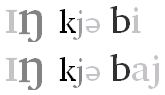
And even if you overlook the unfortunate connection to supernatural molestation, this name doesn’t exactly roll off the tongue like a buttered marble. It’s hard to know whether to pronounce the final syllable to sound like be or like bye. Some people, missing the connection to incubator, might even try to put the main emphasis on the second syllable. If the second syllable isn’t emphasized, the first and second together sound all pinched and puckered, like that little whatever-it-is inside the egg in the company logo.

The Name Inspector hates to be so hard on a startup name, but he calls ‘em like he sees ‘em. Maybe it’s not too late for some rebranding before launch.

Tags: incuby, the name incuby, incubus, incubi, incubator

« Prev - Next »